

Quick Summary
During a roof inspection, a roofer looks at your home from the ground, walks the roof to check shingles, flashing, vents, and gutters, and then heads into the attic to look for moisture, frost, and daylight coming through the decking. A typical visit to a house in Gallatin County takes under an hour, and it ends with photos and a plain explanation of what needs attention now and what can wait. What separates a useful inspection from a quick glance is the conversation at the end, where you should see a photo behind each recommendation before anyone mentions a repair.
Key Takeaways
A roof inspection covers the yard, roof surface, flashing and vents, gutters, attic, and interior ceilings.
A typical house takes under an hour, and steep, large, or snowy roofs take longer.
Snow load, freeze-thaw swings, ice dams, and summer hail shape what we look for around Bozeman.
Fall, the weeks after a hail or wind storm, and the months before a home sale are good times to book.
You should leave with photos, notes, and a clear sense of what is urgent and what can wait.
Plenty of homeowners book a roof inspection without a clear idea of what the visit involves. Someone climbs a ladder, wanders around up top, and then gives you an opinion that could cost a few hundred dollars or a few thousand. If you have wondered what happens during a roof inspection, and what the roofer is really looking at up there, this walk-through covers the whole visit from the moment the truck pulls up.
We inspect roofs all over Gallatin County, from older homes near downtown Bozeman to newer builds out toward Belgrade and Four Corners. The steps below are the ones our crew follows, along with the Montana weather details that change what we pay attention to.
The First Hour: What Happens During a Roof Inspection
An inspection starts on the ground. Before anyone touches a ladder, the roofer walks around the house and looks at the roofline from a few angles. A dip along the ridge, a wavy section of shingles, or a gutter pulling away from the fascia all show up better from the yard than from up top.
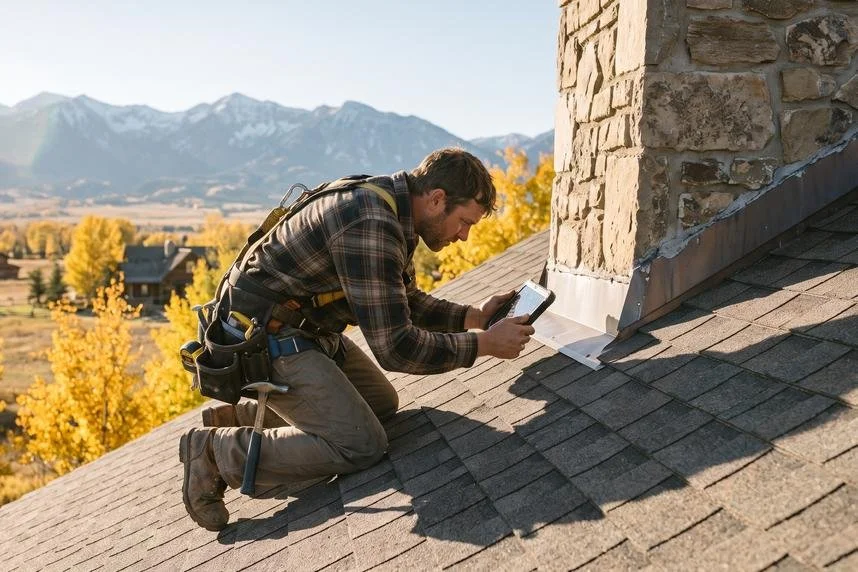
Then the roofer goes up, as long as the pitch and the weather make it safe. Up close, the job is slow and a little tedious: shingle by shingle, seam by seam, and around every chimney, skylight, and pipe that pokes through. Our roof inspection in Bozeman is free, and we take photos as we go so you can see the same things we saw.
Roof Inspection Process, Step by Step
The Ground Walk
We look at the overall shape of the roof, the gutters and downspouts, the fascia and soffits, and any trees hanging over the house. Granules piled at the bottom of a downspout are a clue that shingles are wearing out, and stains on the siding under the eaves can point to water getting behind the gutters.
On the Roof
Up top, we check the shingles or panels, the ridge caps, the valleys where two slopes meet, and the flashing along walls and chimneys. We press on suspicious spots, too. A soft area under your boot can mean the decking below has been wet for some time.
In the Attic
The attic tells the other half of the story. Water stains on rafters, damp or flattened insulation, frost on the underside of the roof deck in winter, and pinholes of daylight all show problems that the outside of the roof can hide. We also look at how the attic breathes, from the soffit vents at the eaves to the vents near the peak.
The Debrief
Once we're back on the ground, we sit down with you and go through the photos. Some things need fixing soon, some are worth watching, and some are fine. Seth gave us 5 stars and wrote that Frank on our team "took the time to explain the entire roofing process," and that's the tone we aim for at the end of every inspection.
What Does a Roof Inspection Include?
A thorough inspection covers more than shingles. Here is the checklist our crew works through on a typical home:
Shingles or panels that are missing, cracked, curling, blistered, or losing granules
Flashing around chimneys, skylights, dormers, and sidewalls
Rubber boots around plumbing vents, which crack in the high-altitude sun
Ridge caps, valleys, and drip edges
Gutters, downspouts, and the fascia boards they hang from
Soft spots or sagging in the roof deck
Attic insulation, ventilation, and signs of moisture or frost
Ceiling stains inside the house, especially near outside walls
Flat and low-slope roofs on garages, porches, and shops get their own look. On those, we check membrane seams, punctures, drains, and scuppers, and we watch for ponding water, which is a common source of slow leaks around here.
How Long Does a Roof Inspection Take?
A typical single-family home takes under an hour from the first look to the debrief. Bigger homes, steep roofs, complicated rooflines with several valleys and dormers, and commercial buildings take longer. So does a house with a tricky attic, because crawling between trusses to reach the eaves is slow work.
Weather plays a part as well. When snow or ice covers the roof, walking it may not be safe. In that case, we start with the ground, the edges, the attic, and the ceilings, then come back for a closer look at the surface once it clears.
Roof Inspection in Bozeman: What Montana Weather Adds
Gallatin County roofs deal with conditions that roofs in milder places don't, and those conditions shape the inspection. Heavy snow sits on roofs for weeks at a time, so we look for sagging along the ridge and between rafters, as well as cracked or split framing in the attic.
Freeze-thaw swings are another big one. Bright winter afternoons melt snow near the peak, the water refreezes at the cold eaves, and ice dams push meltwater under the shingles. We check the eaves, the ice and water shield where we can see it, and the attic ventilation that keeps the roof deck cold.
Summer hail leaves its own marks. Hail can bruise asphalt shingles without breaking them, so we look for soft spots, missing granules, and dents in metal vents and gutters. Wind coming off the Bridgers and the Gallatin Range can lift shingle tabs and break the seal underneath, which leaves the roof looking fine from the driveway even though it's ready to let water in.
When an inspection turns up storm damage, our notes and photos are the same records you can share with your insurance company. Dawn gave us 5 stars and described our crew as "very professional and helpful with the insurance claims," and we're glad to meet your adjuster on site. Your insurer makes the coverage decision, and our job is to give an accurate picture of the roof.
What a Roof Inspection Costs and When to Book One
Our inspections are free. Pricing for other inspection services around the area varies with the size of the roof, the type of report, and whether it's tied to a home sale. Our guide to the average roof inspection cost in Gallatin County breaks those factors down.
Timing matters more than people expect. These are the moments when an inspection pays off best:
In the fall, before the first heavy snow, when repairs are still easy to schedule
After a hailstorm or a strong windstorm, even if nothing looks wrong from the ground
Before you buy or sell a home, so the roof doesn't surprise anyone at closing
After a leak, a water stain, or a heavy ice dam season
When your roof is getting older, and you want to plan for a repair or replacement
How to Get Ready for the Visit
A little prep makes the inspection quicker and more useful. Clear a path to the attic hatch, move cars away from the side of the house the ladder will go on, and keep pets inside.
Jot down anything you've noticed, such as a drip during last spring's thaw or a stain that grew over the winter, along with roughly when it showed up. If you have paperwork from past roof work, including the year the roof went on, have it handy. Those details help the roofer connect what they find to what you've seen.
FAQs
-
No, the outside of the roof can be inspected without you there. Attic access gives a fuller picture, though, so plan to be home or leave a door open for the crew if you can.
-
It looks like a quiet visit: a ladder against the house, a roofer moving slowly across each slope, and a stop in the attic. Neighbors notice the ladder more than any noise, because nothing gets torn off or opened up.
-
Avoid guessing at the cause or the date of damage you didn't see happen. Stick to what you know, share your photos and the roofer's notes, and let the adjuster reach the coverage decision from the evidence.
-
Widespread curling, bald patches where granules are gone, a sagging ridge, leaks that come back after repairs, and a roof near the end of its expected life are the five we weigh first. Two or three of these together usually means it's time to price a replacement and a repair side by side.
-
Yes, and a winter visit can catch things a summer visit misses, such as frost in the attic or ice building along the eaves. If the surface is too slick to walk, plan on a short return trip in spring to finish the roof itself.
Walking Into Winter With Answers About Your Roof
A roof inspection is a short visit with a lot of value. You get a look at the parts of your roof you can't see from the driveway, photos you can keep, and an honest read on what needs attention before snow, ice, and wind put it to the test.
If you'd like to see your roof through a roofer's eyes before the next storm, set up your inspection with Jolly Giant Roofing LLC and we'll walk you through every photo.