
Metal Roofing vs. Shingles for Montana Snow Loads
Quick Summary
Both metal roofing and asphalt shingles can protect Montana homes when properly installed, but they perform differently during snowy conditions. Metal roofing sheds snow more easily and generally lasts longer, while asphalt shingles have a lower upfront cost and offer a familiar residential appearance.
The best choice depends on your budget, roof design, maintenance preferences, and long-term plans. Proper insulation, ventilation, flashing, and professional installation are also essential for managing snow, moisture, and ice dams.
Choosing between a metal roof vs. shingles is one of the biggest decisions Montana homeowners face when replacing their roof. While both materials can provide reliable protection, Bozeman's long winters, heavy snow, strong winds, and frequent freeze-thaw cycles make certain roofing systems better suited for the local climate than others. The best option depends on your home's design, your budget, and how long you plan to stay in the property.
At Jolly Giant Roofing, we help homeowners throughout Bozeman and Gallatin County choose roofing systems that stand up to Montana weather year after year. Every home is different, so we take the time to explain the advantages and trade-offs of each material, helping you make a decision with confidence. You can also read more about our residential and commercial roofing in Bozeman.
Why Montana's Climate Matters
A roof that performs well in a mild climate may face greater challenges in Montana. Winter storms can leave several feet of snow on rooftops, while spring often brings rapid temperature changes that create ice dams. Summer thunderstorms may also bring hail and high winds.
These conditions place constant stress on roofing materials. A durable roof helps prevent leaks, minimizes maintenance, and protects your home from costly water damage.
When comparing roofing options, it's important to think beyond appearance and consider how the roof will perform throughout every season.
Metal Roofing at a Glance
Metal roofing has become increasingly popular across Montana because it performs exceptionally well in snowy climates. Modern metal roofs are available in a variety of styles and colors, making them suitable for both traditional and contemporary homes.
One of the biggest advantages of metal roofing is its ability to shed snow more easily than many other roofing materials. Instead of allowing large amounts of snow to accumulate, the smooth surface encourages snow to slide off as temperatures rise.
Benefits of metal roofing include:
Excellent snow shedding
Outstanding durability
Long lifespan
Strong resistance to high winds
Low maintenance
Energy-efficient performance during warmer months
Resistance to cracking and warping
Many homeowners appreciate that a properly installed metal roof can continue performing for decades with relatively little maintenance.
Asphalt Shingles at a Glance
Asphalt shingles remain the most common residential roofing material across the United States. They continue to be a popular choice because they provide dependable protection at a more affordable upfront cost.
Today's architectural shingles are stronger and more durable than earlier generations, with many products offering improved resistance to wind and impact.
Advantages of asphalt shingles include:
Lower installation cost
Wide variety of colors and styles
Easier repairs if individual shingles become damaged
Faster installation on many homes
Attractive appearance that complements most neighborhoods
For many Bozeman homeowners, asphalt shingles provide an excellent balance between cost and performance.
Which Roof Handles Snow Better?
Heavy snow is one of the biggest factors homeowners should consider.
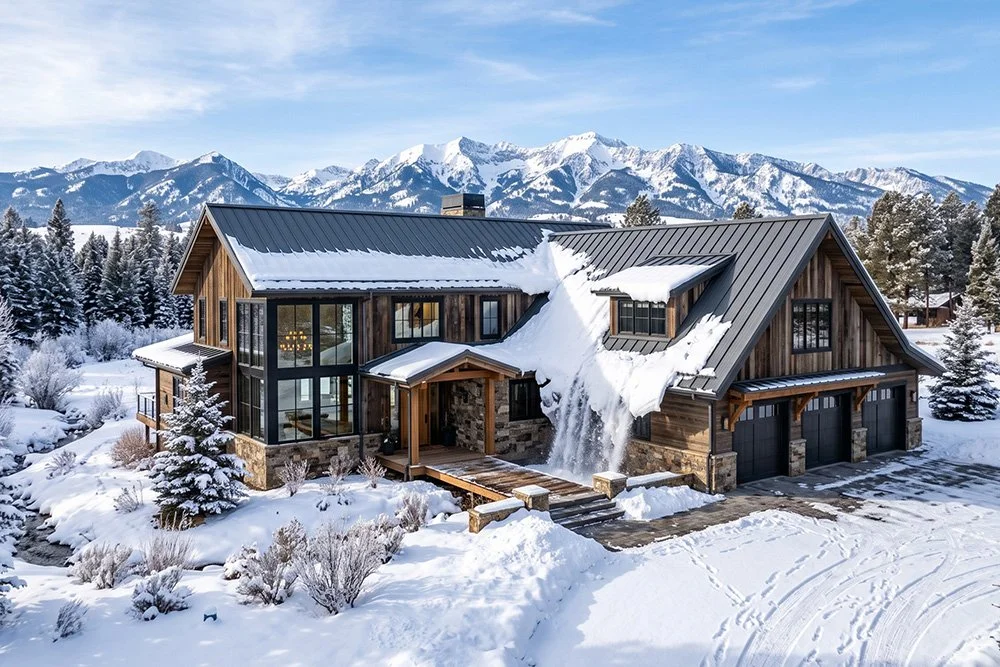
Metal roofs generally have the advantage because snow does not grip the smooth surface as easily. As sunlight warms the roof or temperatures begin to rise, accumulated snow often slides off naturally. This can reduce the amount of weight sitting on the roof after a major storm.
However, snow sliding from a metal roof can create hazards around entryways and walkways if snow guards are not installed. These devices help control how snow leaves the roof, improving safety around the home.
Asphalt shingles tend to hold snow in place longer because of their textured surface. While this means snow is less likely to slide off unexpectedly, it also allows heavier snow loads to remain on the roof for extended periods.
Fortunately, properly designed residential roofs in Montana are built to meet local snow load requirements. Whether you choose shingles or metal, professional installation is essential.
Ice Dams and Winter Performance
Ice dams occur when melting snow refreezes near the edge of the roof, preventing proper drainage. Water can then back up beneath the roofing material and eventually leak into the home.
Neither roofing material completely prevents ice dams on its own. Proper attic insulation, ventilation, and installation techniques are just as important as the roofing material itself.
That said, because metal roofs encourage snow to shed more efficiently, they may reduce the amount of melting and refreezing that contributes to ice dam formation.
Our residential roofing team considers the entire roofing system during every installation, helping homeowners improve long-term performance instead of focusing on just one component.
Durability During Montana Storms
Montana weather can change quickly. A calm afternoon can become a severe thunderstorm with hail and strong winds only hours later.
Both roofing materials can withstand challenging conditions when installed correctly, but there are some differences.
Metal roofing offers exceptional resistance to high winds because large panels are securely fastened to the roof structure. Many modern systems are engineered to withstand significant wind speeds.
Architectural asphalt shingles also perform well, especially premium products designed for severe weather. However, individual shingles may become damaged during extreme wind events or after years of exposure to harsh weather conditions.
In hail-prone areas, impact-resistant roofing products may offer additional protection regardless of which material you choose.
Lifespan Comparison
One of the biggest differences between the two materials is longevity.
A quality asphalt shingle roof typically lasts several decades, depending on the product, installation quality, and local weather conditions.
Metal roofing generally offers a significantly longer service life. With proper installation and routine maintenance, many metal roofs continue protecting homes for 40 to 70 years or even longer.
Although the initial investment is higher, many homeowners appreciate that a metal roof may be the last roof they ever install.
Maintenance Requirements
Every roof benefits from regular inspections, especially after major storms. Catching small issues early can help prevent more expensive repairs later.
Metal roofs generally require less routine maintenance because they resist cracking, curling, and moisture absorption. Occasional inspections are still important to check flashing, fasteners, and sealants, but maintenance needs are typically minimal.
Asphalt shingles are also relatively easy to maintain, although they may require more attention as they age. Individual shingles can loosen, crack, or sustain storm damage over time. Fortunately, replacing a few damaged shingles is often a straightforward repair.
No matter which roofing material you choose, scheduling periodic inspections helps ensure your roof continues protecting your home through Montana's changing seasons.
Cost Comparison
For many homeowners, budget plays a significant role in the decision.
Asphalt shingles usually have a lower upfront installation cost, making them an attractive option for homeowners looking to replace their roof without a larger initial investment. They provide dependable performance and remain one of the most cost-effective residential roofing materials available.
Metal roofing typically costs more to install because of the materials and specialized installation process. However, the higher purchase price should be viewed alongside the roof's longer lifespan, reduced maintenance needs, and potential energy savings.
Rather than asking which option is cheaper, it's often more helpful to ask which option provides the best value over the number of years you expect to own your home.
Energy Efficiency
Montana homeowners experience both cold winters and warm summer days, making energy efficiency another important consideration.
Modern metal roofs reflect a greater portion of the sun's radiant heat than many traditional roofing materials. During the summer, this can help reduce heat transfer into the attic and lessen the workload on your cooling system.
Asphalt shingles absorb more heat, although today's higher-quality products continue to improve in energy performance.
During winter, insulation and attic ventilation generally have a much greater impact on heating costs than the roofing material itself. A well-designed roofing system works together with proper insulation to improve comfort throughout the year.
Appearance and Curb Appeal
Years ago, many people associated metal roofing with barns or commercial buildings. Today's products are very different.
Modern metal roofs are available in a wide range of colors, finishes, and profiles that complement many architectural styles. Some products are even designed to resemble traditional shingles, slate, or wood shakes while offering the durability of metal.
Asphalt shingles also provide plenty of design flexibility. Homeowners can choose from a wide variety of colors and textures to match their home's exterior and neighborhood aesthetic.
Ultimately, appearance comes down to personal preference. Both materials can create an attractive finished look when professionally installed.
Which Roofing Material Adds More Value?
A new roof is one of the home improvements that can enhance curb appeal and give prospective buyers greater confidence in a property's condition.
Metal roofing may appeal to buyers looking for long-term durability, lower maintenance, and excellent performance in Montana's climate. Some homeowners are willing to pay more for a home with a roof that may not need replacement for decades.
Asphalt shingles continue to add value as well, particularly when they're installed with quality materials and backed by professional workmanship. Because they're familiar to many buyers, they remain a popular choice across residential neighborhoods.
Regardless of the material, a professionally installed roof demonstrates that the home has been well maintained.
Why Homeowners Trust Jolly Giant Roofing
At Jolly Giant Roofing, we understand that replacing a roof is a major investment. That's why we take a consultative approach instead of recommending the same solution for every homeowner.
As a family-owned company serving Bozeman and Gallatin County, we're committed to honest communication, quality workmanship, and treating every property with the same care we'd give our own. Whether you're considering asphalt shingles or a metal roof, we'll explain the benefits of each option so you can make an informed decision without unnecessary pressure.
From the initial inspection to the final cleanup, our goal is to make the entire process as smooth and stress-free as possible. That's what we mean when we say we're Big on Quality. Jolly on Service.
If you're considering a new roof for your business, we also provide commercial roofing solutions tailored to Montana's demanding weather conditions.
Schedule Your Free Roofing Consultation
If you're still deciding between a metal roof vs. shingles, we're here to help. Every home is different, and the best roofing material depends on factors like your budget, roof design, and long-term goals.
Contact Jolly Giant Roofing today to schedule your free roof inspection. We'll evaluate your existing roof, answer your questions, and help you choose a roofing system that's built to withstand Montana's snow, wind, and changing weather for years to come.
Frequently Asked Questions
-
Metal roofing often performs well in snowy climates because its smooth surface allows snow to slide off more easily. However, snow guards may be needed above entrances, walkways, and other areas where sliding snow could create a hazard.
-
Asphalt shingles have a textured surface that tends to hold snow longer than metal roofing. A properly designed and installed roof should still meet local snow-load requirements.
-
Metal roofing generally lasts longer than asphalt shingles. The actual lifespan of either material depends on product quality, installation, maintenance, and exposure to severe weather.
-
Yes. Ice dams are often connected to heat escaping through the attic, uneven roof temperatures, poor ventilation, or inadequate insulation. Roofing material alone does not eliminate the risk.
-
Asphalt shingles usually cost less to install. Metal roofing requires a larger upfront investment but may offer better long-term value because of its durability and longer service life.