

The Ultimate Flat Roof Inspection Checklist
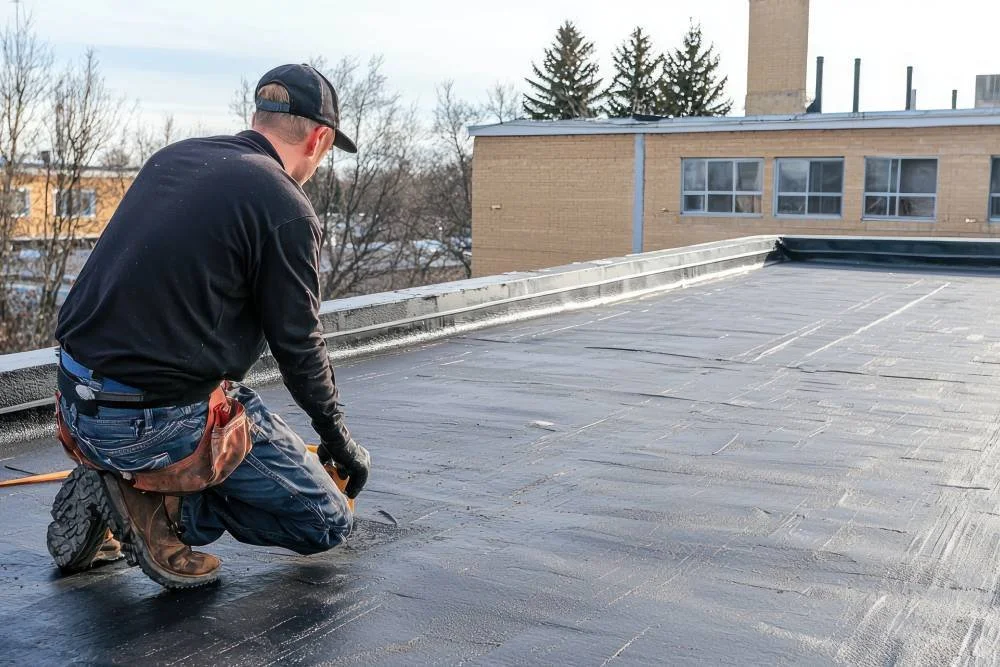
Flat roofs are a common choice across commercial properties in Bozeman and Gallatin County. They are cost-effective, practical, and well-suited to Montana's wide-open architectural landscape.
The trade-off? They need consistent attention to stay in good shape. Unlike sloped roofs that shed water naturally, flat roofs hold onto moisture, debris, and stress from temperature swings, and Montana delivers plenty of all three.
Using a solid flat roof inspection checklist is one of the most straightforward ways to protect a commercial property before small issues turn into expensive ones. If a building is a retail space, warehouse, or office, its roof is worth protecting.
Why a Flat Roof Inspection Checklist Matters for Montana Buildings
Bozeman sees hailstorms in summer, heavy snow loads in winter, and significant temperature swings between seasons. Commercial roofs take the full brunt of it all. Flat roofs are particularly vulnerable because water has nowhere to go on its own. When drainage is even slightly compromised, water pools and seeps through the smallest weak points.
Add freeze-thaw cycles on top of that, and minor surface wear can become a leak within a single season. Routine inspections put property owners ahead of the damage, rather than having to react to it. The cost of a professional inspection is a fraction of what water damage, mold remediation, or structural repairs run.
What to Check: A Room-by-Room Approach to the Roof
A proper inspection moves methodically through the roof, not just a quick visual scan from the edge. These are the areas to cover:
Surface condition: Look for cracks, blistering, punctures, and granule loss. Blistering happens when moisture gets trapped under the membrane and expands with heat. Left alone, it breaks open.
Ponding water: Any area holding water 48 hours after rain needs attention. Standing water adds weight and accelerates membrane deterioration.
Flashing and seals: The edges, corners, and any roof penetrations (vents, HVAC units, skylights) are where leaks most commonly start. Cracked caulking or lifted flashing is an entry point for water.
Drains and gutters: Debris collects fast, especially in the fall. Blocked drains can quickly turn a manageable rain event into a pooling problem.
HVAC vents: Blocked vents trap heat, which can degrade the roofing material directly around them and accelerate deterioration.
Mold or moss growth: Organic growth signals persistent moisture. It weakens membranes and wooden structural elements over time.
Internal structure: Damaged joists, water staining on ceilings below, or soft spots underfoot all point to issues beyond the surface.
Using a roof inspection checklist template helps keep this process consistent across visits. Documenting conditions with photos and notes also makes it easier to track changes over time. It also helps build a useful record if an insurance claim becomes necessary.
How Often Should a Flat Roof Be Inspected?
Twice a year is the general standard. Once in spring, after winter has done its work, and again in fall before temperatures drop again. After any significant weather event, a quick visual check is also worth doing. Hailstorms can cause damage that is not obvious from the ground but becomes clear up close.
The same seasonal routine applies to residential properties with flat or low-slope roofing. Snow load and ice damming are real concerns in Gallatin County, and catching issues in autumn saves a lot of headaches come January.
Keeping a roof inspection checklist PDF or a digital record of past inspections also helps. It gives a better picture of how the roof has aged and what areas have been flagged repeatedly.
Don't Skip the Documentation
One part of the inspection process that people often overlook is keeping records. After each visit, note the date, the conditions observed, and any action taken or recommended. Photos are invaluable here.
Good documentation serves two purposes. First, it keeps maintenance on track and prevents the same problem from being ignored season after season. Second, it can make a meaningful difference when filing an insurance claim after storm damage. Insurers respond better to documented roof history than to a property owner who cannot account for when the roof was last checked.
Keep Your Roof Working for You
A flat roof that receives regular maintenance can last for decades. One that gets ignored tends to fail well before its time, and the repairs that follow are rarely cheap. The checklist approach just needs to happen consistently.
At Jolly Giant Roofing, we work with commercial and residential property owners across Bozeman and Gallatin County. Our team knows what Montana weather does to roofs and what to look for before damage has a chance to take hold. You can read more about the work our Bozeman roofers do close to home.
Ready to get ahead of roof problems this season? Schedule your inspection with us today.