

Quick Summary
Ice dams develop when heat from the attic melts snow on the roof, causing the water to flow toward colder eaves and gutters where it refreezes. The resulting ice can trap additional meltwater and allow it to seep beneath shingles. Bozeman's sunny winter days and freezing nights make this cycle particularly common. Air sealing, consistent attic insulation, and balanced ventilation address the underlying cause by keeping the roof deck cold. Clean gutters and properly installed heat cables add another layer of protection, while interior water stains or recurring ice dams warrant a professional inspection.
Key Takeaways
Root cause: Uneven roof temperature from escaping attic heat is what allows snow to melt and refreeze along the eaves.
Lasting fixes: Sealing air leaks, adding insulation, improving soffit and ridge ventilation, and venting exhaust fans outdoors keep the roof surface evenly cold.
Gutter care: Clearing debris after the leaves drop and checking downspouts, hangers, and pitch gives meltwater a clear path off the roof.
Heat cables: Cables can help in trouble spots like valleys and shaded eaves, although they work best alongside insulation and ventilation upgrades.
Safe removal: Avoid chipping ice with hammers, and use a calcium chloride stocking or professional steam removal for large dams.
When to call a professional: Thick ice along the eaves, interior water stains, a frosty attic, or ice dams that return each winter all warrant an inspection.
Bozeman winters often shift between bright afternoons and bitterly cold nights, creating challenging conditions for rooflines. Snow can melt during the day, flow toward the eaves, and freeze again after the sun drops behind the mountains. After several cycles, a thick ridge of ice can build up along the roof edge and gutters.
Water trapped behind that ice can work beneath shingles and reach ceilings, walls, and insulation. Understanding how to prevent ice dams gives Gallatin Valley homeowners an advantage before heavy snow settles in. A few targeted improvements inside the attic and along the gutter line can go a long way toward keeping winter meltwater flowing where it belongs.
How to Prevent Ice Dams: What Causes Them in the First Place?
Ice dams develop when heat escaping from the attic warms the roof deck and melts the snow above it. The resulting water travels toward the colder eaves and gutters, where it freezes and gradually forms an ice ridge.
Additional meltwater can then collect behind the ridge and back up beneath the shingles. Since uneven roof temperatures are the underlying problem, prevention focuses on keeping the entire roof surface consistently cold.
Bozeman's climate makes this cycle especially common. Sunny winter days, cold nights, and snow that lingers for weeks give ice plenty of chances to form. Clogged gutters and poorly sealed attic hatches only make the problem worse.
Here at Jolly Giant Roofing LLC, we often see ice dams on older homes with thin attic insulation and on additions where the roof framing leaves little room for airflow. Gutters play a part too. Proper gutter installation and pitch help meltwater drain away before it can freeze in place.
How Do I Stop Ice Dams from Forming?
A lasting solution starts inside the attic. Keeping household heat in the living space while maintaining cold airflow beneath the roof deck removes the conditions ice dams require. Focus on these steps:
Seal air leaks: Warm air slips into the attic through openings around light fixtures, plumbing stacks, bathroom fans, and attic hatches. Sealing these spots with foam or caulk cuts heat loss at the source.
Add attic insulation: A deep, even layer over the attic floor keeps household heat below and the roof deck cold. Thin or compressed areas are common trouble spots.
Improve ventilation: Soffit vents bring cold outdoor air into the eaves, while ridge vents let warm, humid air escape near the peak. Balanced airflow helps keep roof temperatures closer to outdoor temperatures.
Vent exhaust fans outdoors: Bathroom and kitchen fans that empty into the attic add heat and moisture where it causes the most harm.
Install ice and water shield: This waterproof membrane sits under the shingles along the eaves and adds a layer of protection if water backs up.
These steps work best as a package. Insulation without ventilation can trap moisture, and ventilation without air sealing can pull warm air into the attic. If your roof is nearing the end of its life, a residential roofing project is a practical time to add eave protection and improve airflow in one visit.
Does Gutter Cleaning Help Prevent Ice Dams?
Clean gutters give snowmelt a clear path away from the roof. Leaves, pine needles, and shingle granules can accumulate inside the gutter channel by late fall. When that debris freezes, it can create a solid surface where ice begins building along the eaves.
Plan to clean your gutters after the leaves have fallen and again before the first major snowfall if trees extend over the roof. Check that downspouts remain open and direct water well away from the foundation. A frozen or blocked downspout can cause water to back up into the gutter and collect along the roof edge.
Heavy ice can also place substantial stress on the gutter system. Hangers may pull loose, while fascia boards can deteriorate from repeated exposure to moisture. Inspect the hangers and gutter pitch each fall to keep the system securely attached and properly sloped toward the downspouts.
Gutter guards can reduce the amount of debris entering the system, but some designs may retain snow and ice on top, so choose a style that suits snowy conditions.
Do Heat Cables Work for Ice Dams?
Heat cables are electrical wires installed in a zigzag pattern along roof edges, inside gutters, and through downspouts. They generate enough heat to create narrow drainage paths, helping meltwater flow instead of refreezing. They can be useful for persistent problem areas such as roof valleys, shaded north-facing eaves, and sections with lower slopes.
Cables address the immediate ice buildup but do not correct the heat loss causing the problem. They work best as a supplemental measure alongside insulation and ventilation improvements. Install them before snow arrives and follow the manufacturer's instructions carefully.
Connect them to a GFCI outlet, and have a professional verify that the installation method and clips will not damage the shingles. Running heat cables throughout the winter also increases electricity use, so plan to operate them when weather conditions make them necessary.
When Should I Call a Professional About Ice Dams?
Some ice dam problems require more than a quick DIY solution. Consider scheduling a professional inspection if you notice any of the following:
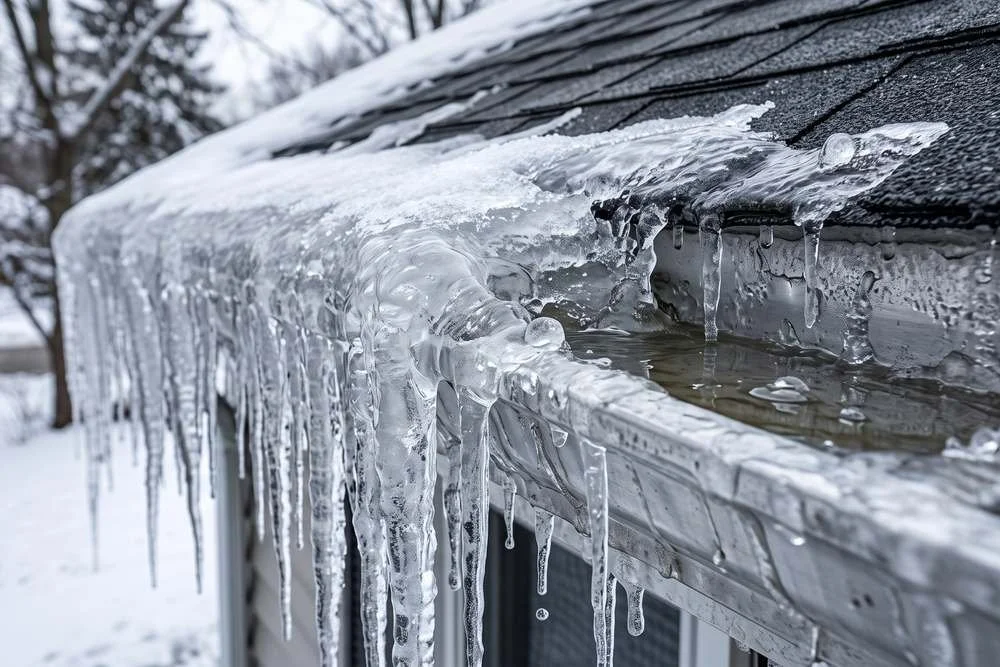
Thick ice along the eaves: A heavy band of ice with long icicles hanging from the gutter line.
Water stains inside: Brown spots on ceilings or walls near exterior walls after a thaw.
Wet or frosty attic: Damp insulation or frost forming on the underside of the roof deck.
Repeat damage: Ice dams returning winter after winter in the same spots.
Sagging gutters: Gutters pulling away from the fascia under the weight of ice.
Avoid climbing a ladder onto an icy roof. Slips and falls are a real risk in Montana winters, and a trained crew has the gear to work safely.
Frequently Asked Questions
-
Safety comes first. Avoid chipping ice with hammers or axes, as this can crack shingles and damage gutters. Fill a nylon stocking with calcium chloride and lay it across the dam to melt a drainage channel. Professional steam removal is the safest option for large dams.
-
Yes, they can. Water forced under shingles can rot roof decking, soak insulation, and stain drywall. Over time, trapped moisture may lead to mold and loosen gutters from the fascia.
-
Coverage varies from policy to policy. Some policies cover sudden interior water damage and exclude prevention or gutter repairs. Check with your insurer and take photos of any damage as soon as you spot it.
-
Icicles form when surface runoff freezes as it drips off the roof edge. An ice dam is a thick ridge of ice along the eave that traps meltwater behind it. Large icicles can signal that an ice dam is forming above.
-
Costs depend on the fix. Gutter cleaning and air sealing sit at the lower end. Insulation and ventilation upgrades land in the middle, and heat cable costs vary with the length of the roof edge.
Keeping Meltwater Moving Through a Bozeman Winter
Ice dams start with heat in the attic and end with water where it does not belong. Sealing air leaks, adding insulation, improving ventilation, and keeping gutters clear can dramatically cut the risk. Heat cables can help in tricky spots, and early action keeps small problems from turning into costly repairs.
Our crew likes to stay Big on Quality and Jolly on Service, even when the icicles grow taller than we do. Talk with our team about gutter options for your home and give meltwater a clear path off your roof this season.